
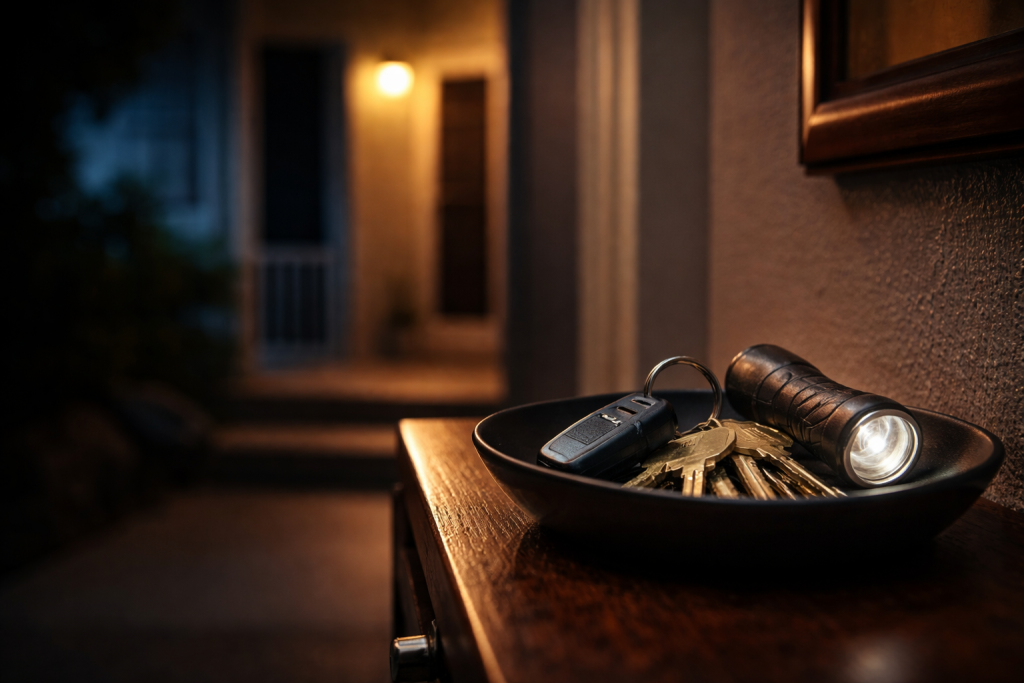
The night lockout habit that causes most late calls is surprisingly simple: setting something down for “just a second.” Therefore, keys land on a counter, slip into a jacket you will not wear tomorrow, or stay inside a bag that gets moved to the trunk.
That is to say, the problem is not forgetting keys forever. It is the small routine that breaks your normal pattern right before bed, when you are tired and moving on autopilot. Consequently, the door shuts, the lock engages, and you realize the habit happened again at the worst time.
The One Habit That Triggers Night Lockouts
The habit is separating your keys from your exit path. In other words, you create a tiny gap between where keys belong and where you will actually leave from in the morning. For instance, you walk in through the garage but place keys on a kitchen counter, or you enter through the front door but leave keys in yesterday’s pants.
Moreover, nighttime is when this habit gets stronger because you are multitasking. You might carry groceries, answer messages, and check the door lock at the same time. As a result, keys become “later,” and later becomes “missing” as soon as the door locks behind you.
Why It Feels Safe Until It Fails
Most importantly, the habit feels harmless because it works nine times out of ten. Similarly, you may have done it for months without a problem. But the one time you step outside to grab something quickly, the door can latch, the handle can spring back, and your keys are still inside.
Meanwhile, modern hardware can lock faster than you expect. Some doors self latch tightly, and some locks engage with a quick thumb turn you do without thinking. Consequently, a small habit creates a big interruption, especially at night when it is cold, quiet, and harder to call a friend for help.
Build A Night Routine That Prevents The Habit
Firstly, pick one “key home” that never changes, like a hook, bowl, or tray placed beside the door you use most. After that, tie the routine to a single action you always do, such as turning on a hallway light or plugging in your phone. Therefore, the moment you do that action, keys go to the same place every time.
Secondly, reduce the number of places keys can hide. For example, avoid leaving them in coat pockets, gym bags, or random drawers. In addition, keep a small flashlight by the door so you are not juggling a phone light while searching and accidentally stepping outside without your keys.
The Two Second Check Before Any Late Step Outside
Create a simple “touch check.” That is to say, before you step out at night, touch keys, touch phone, touch wallet. Consequently, you stop relying on memory and use a physical cue instead.
Likewise, if you live with family, agree on one shared rule: no one closes the main door until the person stepping outside confirms keys are on them. Above all, this keeps the night lockout habit from turning into a repeat problem.
How Home Lockouts Usually Start At Night
At home, lockouts often happen during quick tasks. For instance, taking out trash, letting the dog out, grabbing a delivery, or checking a parked car. However, the risk grows when you expect to be outside for only a minute. As a result, you skip the key routine and trust luck.
If you want the habit to stop for good, set your home routine around your main entrance and your most common nighttime task. In addition, when you upgrade or adjust door hardware, match it to your lifestyle so the door does not surprise you with a faster latch than you are used to. When help is needed for home access issues, residential locksmith Ottawa support can address lock behavior, alignment concerns, and key control choices.
How Business Lockouts Happen After Hours
Business lockouts at night usually start with closing tasks and divided attention. For example, someone arms an alarm, carries items out, and locks up while thinking about tomorrow’s schedule. Consequently, keys get set down on a counter or left in a back room while the front door is already secured.
Moreover, shared access can make it worse. If multiple staff members hold keys, people assume someone else has them. Therefore, a single missing key can turn into a late night call for a manager, a property owner, or a staff member who just wants to get home. For access planning and key management options, commercial locksmith Ottawa service can help tighten routines without making closing harder.
Car Lockouts Are Often The Same Habit In A Different Place
Car lockouts often come from the same pattern: separating keys from the exit path. For instance, you place keys on the seat while loading groceries, then shut the door to return the cart. Consequently, the vehicle locks, and keys are now inside.
Similarly, remote fobs can create false confidence. You may assume the car will not lock if the fob is inside, but behavior varies by make and settings. Therefore, the best fix is still routine based, not hope based. If you need help with vehicle entry or key solutions, automotive locksmith Ottawa support fits those late evening surprises.
Make The Habit Harder To Repeat
Most importantly, design the environment so the bad habit becomes inconvenient. Place the key home where you cannot miss it, and keep the area clear so keys do not blend into clutter. In addition, consider using a bright key tag or a lanyard that feels obvious in your hand.
To clarify, the goal is not perfection. It is a routine that catches you on tired nights when your brain wants the easiest option. Consequently, you prevent lockouts before they start, and you keep nights calm instead of turning them into a scramble. If you ever need a dependable local team for urgent lockouts or prevention advice, Best K Locksmith can help you reset the routine and regain control of access.
FAQs
What is the quickest way to stop late night lockouts?
Firstly, choose one permanent key spot by the door you use most. Therefore, every time you come in, keys go there before anything else happens. In addition, do a quick touch check before stepping outside at night.
Why do lockouts happen more often at night than in the afternoon?
At night, people are tired and distracted, so habits take over. Consequently, keys get placed in random spots or left inside during quick steps out. Meanwhile, fewer backup options exist because friends and family may be asleep.
Should I hide a spare key outside to avoid lockouts?
It can help, but it can also create risk if the hiding place is predictable. That is to say, convenience can reduce security. Instead, consider controlled options like a secure lockbox, a trusted neighbor, or a rekey plan.
Can a door be adjusted so it does not lock me out so easily?
Yes, sometimes the issue is alignment, latch strength, or how the deadbolt and strike plate meet. Consequently, small adjustments can reduce surprise latching. However, the routine still matters because any door can lock behind you.
What should I do if I get locked out late at night?
Stay calm and make sure you are safe and visible. Therefore, avoid forcing the door because damage can cost more than proper entry. In addition, call a professional who can restore access while protecting the lock and door hardware.