
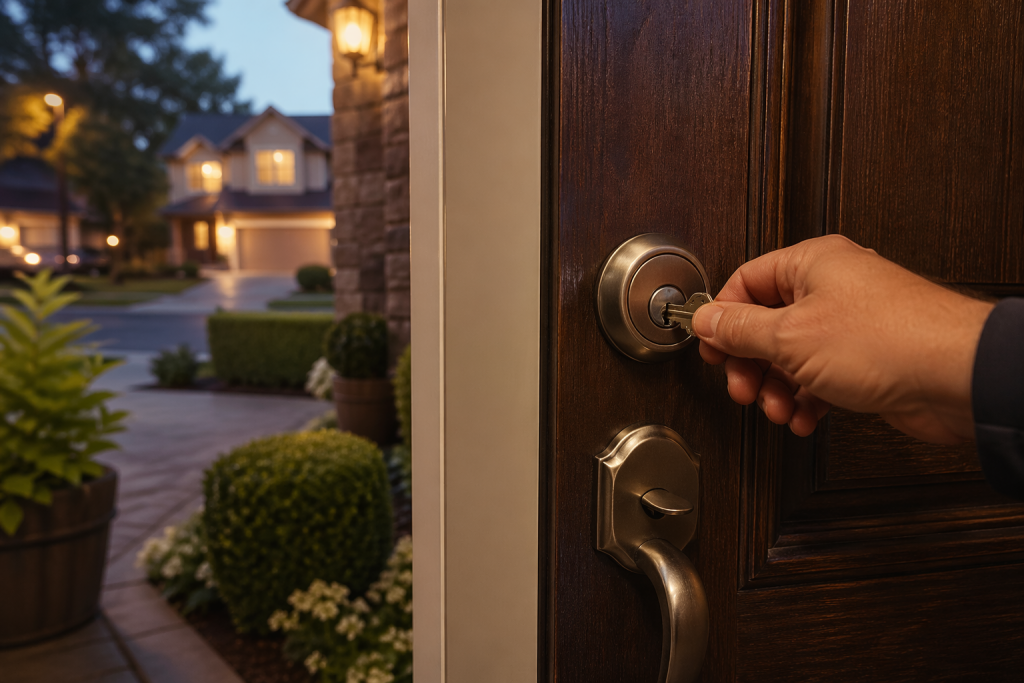
Home security is something most people think about when something goes wrong — a break-in in the neighbourhood, a lost key, or a door that suddenly won’t latch properly. But the truth is, your daily habits shape how secure your home really is, long before any threat appears. Best K Locksmith works with homeowners across Ottawa every day, and the patterns are clear: small, repeated behaviours either build strong security or slowly chip away at it. Understanding which habits help and which ones hurt can make a real difference in protecting your home and family.
The Small Things You Do Every Day Add Up
Most people focus on big security upgrades — installing cameras, buying alarm systems, or replacing doors. Those steps matter, but they mean little when everyday routines undermine them. Leaving a door unlocked while grabbing mail from the end of the driveway seems harmless. Propping a side door open while unloading groceries feels convenient. Forgetting to lock the back gate after letting the dog out is easy to overlook. Each of these moments creates a window of opportunity. Burglars often study a home for days before acting. They look for patterns, gaps, and the moments when no one is paying attention. Your habits are either your first line of defence or your biggest weakness.
Locking Doors and Windows Consistently
This sounds obvious, but inconsistency causes one of the most common home security problems. Many homeowners lock their front door every night without thinking about the back door, the garage entry, or ground-floor windows. A single unlocked point is all a burglar needs. Build a nightly routine that covers every entry point. Walk the perimeter of your home before bed. Check every door, every window, every lock. If you have children or teenagers, include them in this routine. Consistency turns locking up into a habit rather than a task, and habits are harder to forget.
How You Handle Keys Matters More Than You Think
Key management is one of the most underestimated parts of home security. Hiding a spare key under a mat, inside a fake rock, or above a door frame is a habit that many people inherited from their parents. Burglars know every one of those hiding spots. If you need a spare key accessible outside, invest in a secure combination lockbox in a discreet location. Better yet, talk to a locksmith about options that eliminate the need for hidden keys entirely. Modern solutions, including smart locks and keypad entry systems, give you access without leaving a physical key vulnerable.
Never lend keys carelessly either. When a house key passes to a contractor, a babysitter, a cleaner, or a neighbour, you lose control over how it gets copied or stored. Always track who holds a key to your home. When a relationship or service ends, change your locks. It takes less time and money than most people expect, and it gives you a clean slate.
Your Social Media Habits Can Compromise Your Home
This habit surprises many people, but oversharing on social media creates a real security risk. Posting that you are leaving for a two-week vacation, sharing real-time travel photos, or tagging your location while away from home signals to the wrong people that your house is empty. Adjust your settings so only trusted contacts see your posts. Save your travel photos for when you return home. It feels like a small adjustment, but it closes a gap that many people never think about.
Garage Doors, Side Gates, and Secondary Entry Points
Most homeowners secure their front door carefully and forget everything else. The garage is one of the most frequently exploited entry points in home break-ins. Many garage door openers carry simple codes that are easy to override. If your opener is outdated, replace it with a model that uses rolling-code technology. Always close and lock the door between your garage and your living space, even if the garage door itself is closed.
Side gates, basement windows, and utility doors deserve the same attention. Commercial locksmith principles apply at home too — every access point needs the same level of protection as the main entrance.
Lighting and Visibility as Deterrents
Dark yards, overgrown bushes near windows, and poor exterior lighting all create cover for unwanted visitors. Motion-activated lights near entry points remove that cover instantly. Trim back shrubs that could hide someone crouching near a door or window. A well-lit, visible exterior sends a clear signal that the home receives regular attention and monitoring.
Visibility works in another direction too. Packages sitting on a front porch for days tell anyone watching that no one is home. Ask a neighbour to collect deliveries when you travel, or use a delivery management service. These small adjustments reduce the signals your home sends to the wrong people.
Routines That Reveal When You Are Home
Predictable routines give anyone with bad intentions exactly what they need. Leaving at exactly the same time every morning, always arriving home at six, and keeping every light off until eight are patterns that observant people notice. Varying your schedule when possible reduces predictability. Use timers on interior lights when you travel so your home appears occupied. Ask a neighbour to park occasionally in your driveway. These low-cost steps break patterns without requiring any major changes.
Talking to a Professional About What You Might Be Missing
Sometimes the best step is an honest assessment from someone who understands locks, entry points, and vulnerabilities. Best K Locksmith offers professional consultations that help homeowners identify gaps they have been living with for years. What seems secure from the inside often looks very different to trained eyes.
Whether your vehicle needs an updated lock system or your home entry points need a full review, working with a professional automotive locksmith or residential specialist brings knowledge that most homeowners simply do not have. A one-hour walkthrough can reveal vulnerabilities that would otherwise go unnoticed for years.
Closing: Home Security Starts With Daily Choices
Home security does not build itself in a single afternoon. It develops through the choices you make every day — whether you lock the back door, how you handle spare keys, what you post online, and whether you address small problems before they become big ones. Best K Locksmith encourages every homeowner to take an honest look at their daily routines and ask where the gaps are. The changes that matter most are often the simplest ones. Start with your habits, reinforce the basics, and reach out to a professional when you are ready for a deeper assessment.
FAQs
1. What everyday habit most commonly compromises home security? Leaving doors or windows unlocked — even briefly — is one of the most common and preventable security lapses. Building a consistent locking routine is the simplest and most effective fix.
2. Is hiding a spare key outside my home really that risky? Yes. Burglars know common hiding spots like under doormats, fake rocks, or above door frames. A secure lockbox or a keypad entry system is a far safer alternative.
3. How often should I change my home locks? Change your locks whenever you move into a new home, after a key goes missing or someone steals it, or when someone who had a key no longer needs access. A locksmith can complete this quickly and affordably.
4. Can social media activity actually affect my home security? It can. Sharing travel plans or real-time location updates publicly signals that your home sits unoccupied. Limiting your audience and saving travel posts for after you return significantly reduces this risk.
5. How can a locksmith help improve my everyday home security habits? A professional locksmith can assess your entry points, identify outdated or vulnerable locks, recommend modern solutions, and help you develop better habits around key management and access control.